Praise be to Allah, He who taught (the use of) the pen, taught man that which he knew not; and Salat and Salam on His Apostle after whom there is no Prophet to be born. There is Ummah after his Ummah and no book after his Books; and Salat and Salam on his family, and no his companions and on those who follow his path and may this continue up to the Last Day, Amin.
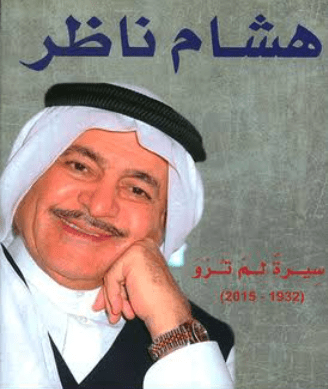
It is my pleasure to comment on the aforementioned book of H.E. Sheikh Hisham Nazer, the Ex-Minister of Planning and Former Minister of Petroleum.
An aristocratic intellectual and a gifted writer who came with a new methodology and a new approach, Hisham Nazer is not one of our intellectuals of whom we are so proud only, but he is also one of the pioneering elite who made significant contribution to the rebirth and development of our beloved country. He has spent 38 years in public service, 28 years of which as a cabinet Minister.
Sheikh Hisham Nazer is distinguished also in that, he was not brought up in the old districts of Jeddah. Unlike the majority of his fellowship, he did not get his elementary education in what we called Katatib but rather, he studied in the prestigious Victoria College, the American University and completed his studies in the USA. With this very special educational and cultural background, it is not surprising that his book “Power of a Third Kind” was written in a high level and eloquent English language.
His deep understanding of western culture and society avails him the use of appropriate idioms, expressions analogies like : mass media, market democracy, evil force.. etc that easily bring home the point.
The author displays, if unwittingly, a familiarity with the art of analysis: cautious, yet bold on controversial issues such as the concept of power and the “new world order”.
When I began to go through the book my first observation was that its introduction is so long, a pattern that is not familiar in books written in English. But after a thorough study of its five chapters, I found it to be a thought-provoking book that deals with a very important issue, not to say the most important one.
In the introduction the author articulates the issues being addressed and the context within which he is addressing them.
In the first chapters he does not take the trouble of explaining what he means by the power of a third kind, leaving this to the intelligence and imagination of his elite readers who, of course, know the first and second kinds of power (natural “physical” and moral).
In the first chapter the author raises the critical question: Who will control the redefinition effort about our political world and what will be the terms of discussion when we are talking about the unprecedented impact of distance destroying technology on indigenous cultures?
He argues that Human Power, the primary source of change, has never been more promising and, paradoxically, never more in danger of being narrowed. With the advantages of electronic communications in the hands of a few Western nations, we are entering an age when Man’s conquest of Nature has given him the confidence to invade the domain of Man himself. Hisham Nazer takes a further step to state that distance no longer protects culture. That, there is a need to alert developing world intellectuals to the fact that the effort to maintain cultural integrity has entered a new, more sophisticated phase. He stresses that intellectuals must stand back and take a long look at how they intend to protect their social and political institutions.
In the second chapter the author tries to explain how the power of a third kind works. He underlines that power of a third kind will be the defining element of the twenty-first centrury. He suggests that (it is high time we cast aside the entire “power is corrupt” and the “lust for power” rhetoric). Because Western nations are already adapting their concept of power to fit opportunities inherent in power of a third kind. Their aggressive response has them ahead in creating a world vision that, as one would expect, offers every advantage to the promotion of their national interests. If the entire globe accepts the Western definition, human power will be Vested in the West.
In this chapter the author describes the early uses of power of a third kind and projects the shape of Western foreign policy in the next several decades.
Hisham Nazer argues that to use power of a third kind effectively, foreign policy will have to be wrapped around the latest means of technology namely, televisions, telecommunications, the internet and all other forms of technological extensions of thought, symbols, and images. He calls the elite to consider how political change can be made more readily acceptable when the Framework for interpreting and judging “what’s happening” is assumed by others as a universally applicable frame. In this second chapter the author rightly draws attention to the fact that:
“The world, in nearly every sphere of political action is, as it were, standing on one foot. Knowing where and when to put the other foot down is a subject of intense debate among Western foreign policy and commercial leadership.”
It is obvious that the author tends to say “knowledge is power”; and may be this is the third kind of power he is talking about. That, when it is assumed that Western culture, armed with media control, is the only universal culture, the binomial choice is only a rhetorical, not a real question, that, there actually is only one “true” choice. The right to choose becomes the right to use a single interpretative framework and only those choices implicated by that framework.
Chapter three deals with the first uses of power of a third kind and includes a brief visit to the “Global Village”. Here, the author acknowledges the fact that America is the clear leader in articulating a foreign policy based on the emergence of a power of a third kind. Other Western members of the G8 are either following America’s lead or just letting America extend itself. He feels that this will change as the policy strategy gains strength and the full implications of this power are more clearly realized. In this chapter Hisham Nazer takes up the issue of identifying Globalization. He rightly, notes that it has many definitions, but the most prominent among them is “the crystallization of the entire world as a single place”. He prefers the term “universality” rather than “globalization”. For him when universality is seen as realizable and positive goal and the fact of a more global world is tied to the “need to be more global and more humane”, universality moves from an objective to a value. As a value, it easily becomes a criteria for evaluating the “goodness” or “badness” of human actions, and a very effective political tool. With globalization, individuals and nations can find themselves locked into defined roles as out-of-date traditionalists or as marginalized entities unable to cope with life in the global village.
In chapters four and five the authors attempts to exploring the impact of non-government organizations (NGOs) on international relations in general. He notes that NGOs enjoyed in 1994 over 10% or $ 8 billion of world wide public development aid, “surpassing the volume of the combined UN system ($ 6 billion) without the Washington-based financial institutions”. The author make the bold to state that “the Clinton administration wants” to integrate the work not just of government agencies but of international voluntary organizations and of U.S. universities and hospitals with program overseas”. For him this means: In the end, these non-governmental groups are very mach governmental groups without the usual nettlesome, costly and time-consuming problems of accountability and bureaucratic screening.
Dealing with the issue of mediating between the past and the future, Sheikh Hisham Nazer draws the attention of the developing nations’ intellectuals to the fact that they must be critically aware of the power of their own frames and narratives beyond the mundane function of being comforting cultural curiosities. Simply because these stories have been placed on the shelf does not mean that they are dead; it does not mean that they are alive either. They gain strength only when they successfully pass test after test in the school of change.
Dealing with education as a power, Hisham Nazer argues that education should be a site for social and mental growth. It is necessary for preparing children to compete in a world that, for them, will always be present world. They will wake up in the morning faced with all the same fears and hopes of their parents but with substantially different problems. Who has the answers now for the problems they will have in the future? Today’s parents and teachers can only train them to reflect critically on what they experienced in their. Education, for instance, must teach history as a source not as a solution. Math, science and language are process skills involving critical thought but not necessarily teaching the ability to think critically.
Hisham Nazer makes it clear that:
“This is a dangerous moment for non-Western intellectuals to approach education as a kind of follow-on from their roles as spectators in global affairs. Non-involvement in their roles as elite representatives of their countries’ international relations is reflected in their roles at home as parents an citizens”.
He argues that there is a need to commit to the assumption that the most important part of education is the intentional improvement of the process of critical thinking.
He stresses that such education in critical thinking will teach our children how to cope with attractively presented fads of Western culture and the appeals to the supposed universality of Western political individualism. They will learn that the only route to individuality is the thinking individual. They will learn to analyze democracy, not to love or hate it. They will learn the advantages and disadvantages of democracy and free markets. They will learn that there is no magic more powerful or more healthy than the thinking individual who is in continuous interaction with his society.
In general, the book under review of Hisham Nazer is at once a thoughtful and thought-provoking analysis of the impact of our Western-dominated electronic age on the rest of the world. The only thing one misses most in the work is a discussion of the problems that will challenge the Muslim world in particular, and how to deal with them.
Nevertheless, the author must be congratulated on his bold, cogent analysis of the whole affair, particularly for granting due space and recognition to education as the most important investment for human development.
This book deserves to be within immediate reach and easy access of all elite, intellectuals, parents, educationists as well as university students. I wholeheartedly concur with the comments of Sir Watler L. Cutler, the former American Ambassador to Saudi Arabia, published on the back cover that this book “offers all of us – regardless of nationality – much – needed food for thought.”